
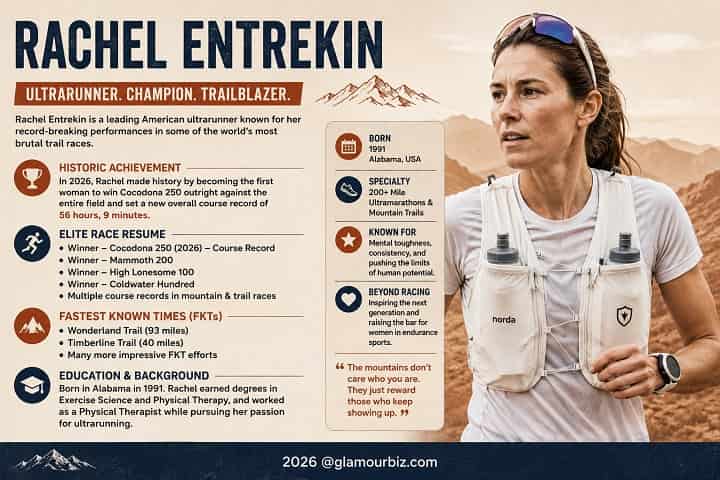
Rachel Entrekin is an American ultramarathon and trail runner known for competing in some of the world’s toughest ultra-distance races, often ranging from 100 to over 250 miles. She has built a strong reputation in endurance sports for her consistency, mental toughness, and ability to perform in extreme conditions.
Originally trained in exercise science and working as a physical therapist, she later shifted her focus to ultrarunning, where she quickly rose to prominence. Her breakthrough performances include major wins in long-distance trail events, especially the challenging Cocodona 250, where she has been one of the top performers. She is widely respected in the ultrarunning community for combining scientific training knowledge with elite endurance ability, making her one of the standout athletes in modern trail running.
Rachel Entrekin’s Historic Cocodona 250 Victory Shocks the Ultrarunning World
The world of ultrarunning witnessed a groundbreaking moment when Rachel Entrekin delivered one of the most unforgettable performances in endurance sports history at the Cocodona 250. The brutal race, which stretches across the rugged landscapes of Arizona for more than 250 miles, is considered one of the toughest ultramarathons in the world. In 2026, Entrekin not only conquered the event but stunned the global running community by becoming the first woman to win the race outright against the entire field.
Her victory was more than just another race result. It became a defining moment for women in endurance sports and a reminder that mental resilience can often outweigh physical limitations. Rachel completed the exhausting course in a record-breaking time of 56 hours and 9 minutes, rewriting the history books while pushing the boundaries of what athletes can achieve in extreme-distance racing.
Throughout the race, Entrekin displayed unmatched consistency, intelligent pacing, and incredible emotional control. Many runners struggle to maintain focus after the first hundred miles, but Rachel appeared calm and determined even as exhaustion set in. Spectators and fellow competitors were amazed by her ability to continue climbing steep trails, crossing desert landscapes, and navigating sleepless nights with relentless determination.
The Cocodona 250 is not simply a test of athletic ability. It is an event that challenges every part of the human body and mind. Runners face intense heat during the day, freezing temperatures at night, elevation gain, sleep deprivation, dehydration, and muscle fatigue. Yet Rachel handled each obstacle with remarkable discipline. Her performance quickly became one of the most talked-about achievements in ultrarunning circles.
What made the victory even more inspiring was the emotional reaction from fans and athletes worldwide. Many viewed her win as a symbol of progress in sports traditionally dominated by men. Rachel Entrekin proved that women can compete equally at the highest levels of endurance racing. Her achievement inspired countless runners, especially young female athletes who dream of competing in ultramarathons someday.
Following the race, media outlets and sports communities praised her humility and dedication. Despite achieving worldwide recognition, Rachel remained grounded and focused on the values that shaped her career—hard work, patience, and self-belief. She openly discussed the mental battles she faced during the event and acknowledged the support of her team, pacers, and family.
The victory also brought greater mainstream attention to ultrarunning itself. Events like Cocodona 250 had long been admired within niche endurance communities, but Rachel’s historic win helped introduce the sport to a broader audience. Her achievement sparked discussions about the future of women in endurance athletics and whether more female runners could soon dominate major ultramarathon events.
For Rachel Entrekin, the race was not just about winning a title. It represented years of sacrifice, training, setbacks, and perseverance. Every mile she completed carried the story of an athlete who refused to give up on her dream. Her triumph at Cocodona 250 will likely remain one of the defining moments in modern ultrarunning history for years to come.
Inside Rachel Entrekin’s Journey From Physical Therapist to Elite Trail Champion
Before becoming one of the most respected names in ultrarunning, Rachel Entrekin lived a very different life focused on healthcare and rehabilitation. Her journey from physical therapist to elite endurance athlete is a story of discipline, curiosity, and relentless ambition. Unlike many professional runners who begin training at an early age, Rachel’s rise to international recognition developed gradually through dedication and passion.
Born and raised in Alabama, Rachel developed an interest in health and movement early in life. She pursued higher education in exercise science before earning a doctorate in physical therapy. Her academic background gave her a strong understanding of the human body, recovery, injury prevention, and performance optimization. These skills later became valuable tools in her ultrarunning career.
While working as a physical therapist, Rachel maintained an active lifestyle and enjoyed outdoor adventures. She initially entered trail races as a personal challenge rather than a professional pursuit. However, her natural endurance and competitive mindset quickly became obvious. As she continued racing longer distances, she discovered a unique ability to remain mentally strong even during extreme fatigue.
Many athletes struggle to balance demanding careers with high-level competition, but Rachel managed both successfully for years. She often trained before sunrise or after long workdays, demonstrating extraordinary commitment to her goals. Her ability to stay disciplined while handling professional responsibilities earned admiration from fellow runners and supporters.
One of the most important aspects of Rachel’s journey is her scientific approach to training. Because of her medical background, she understands how recovery, nutrition, sleep, and biomechanics affect performance. She carefully studies her body and adapts training plans to maximize efficiency while minimizing injury risk. This intelligent approach helped her maintain consistency over long periods.
As her race results improved, Rachel gradually gained recognition within the ultrarunning community. She began setting course records and earning victories in some of the toughest endurance races in the United States. Her reputation grew not only because of her speed but also because of her calm and composed racing style. She rarely appeared overwhelmed, even during the most grueling competitions.
Transitioning from healthcare professional to elite athlete was not always easy. The financial realities of endurance sports can be difficult, and professional ultrarunning often requires significant sacrifices. Rachel spent years building her career while managing the uncertainty that comes with competitive sports. Yet her dedication eventually attracted sponsorships and support from major endurance brands.
What separates Rachel Entrekin from many athletes is her ability to connect with people through authenticity. She often speaks openly about self-doubt, exhaustion, and the emotional challenges of racing. Instead of portraying herself as unbeatable, she shares the reality of endurance sports with honesty and humility. This relatability has made her a respected figure beyond the running community.
Today, Rachel’s story serves as inspiration for individuals pursuing unconventional dreams. She proved that it is possible to reinvent oneself professionally while following a personal passion. Her path from physical therapist to trail champion demonstrates that success often comes from persistence rather than instant recognition.
As ultrarunning continues to grow globally, Rachel Entrekin remains a powerful example of what can happen when intelligence, discipline, and passion come together. Her career is not just about winning races—it is about showing people the importance of resilience and believing in long-term growth.
How Rachel Entrekin Became One of America’s Most Dominant Ultramarathon Athletes
Over the last few years, Rachel Entrekin has established herself as one of the most dominant athletes in American ultrarunning. Her rapid rise in the endurance world is the result of years of careful preparation, mental toughness, and an unwavering commitment to improvement. In a sport where races can last for days, dominance is measured not only by speed but by consistency, adaptability, and emotional strength—all qualities Rachel possesses in abundance.
Rachel’s success did not happen overnight. She gradually built her reputation by performing exceptionally well in difficult trail races across the country. From mountainous terrain to desert heat, she consistently demonstrated an ability to thrive under harsh conditions. Each victory added another layer to her growing legacy.
One of the biggest reasons behind her dominance is her mental resilience. Ultramarathons push athletes beyond normal physical limits, often forcing runners to continue despite pain, fatigue, and sleep deprivation. Rachel has repeatedly shown an incredible ability to stay focused during moments when others break down mentally. Her calm demeanor under pressure gives her a major competitive advantage.
Another factor contributing to her success is her strategic racing approach. Unlike runners who begin races aggressively, Rachel often focuses on maintaining sustainable pacing. She understands the importance of conserving energy and avoiding unnecessary risks early in long-distance events. This patience allows her to become stronger as races progress, frequently overtaking exhausted competitors during the later stages.
Rachel is also known for her connection to nature and trail environments. She embraces the solitude and unpredictability of mountain racing, viewing each challenge as an opportunity rather than an obstacle. Her comfort in rugged outdoor settings allows her to perform confidently in races that intimidate many athletes.
Beyond racing, Rachel has become a respected ambassador for ultrarunning culture. She shares training experiences, race insights, and motivational perspectives with fans online, helping grow public interest in trail running. Many young runners view her as a role model because of her approachable personality and inspiring journey.
Her achievements include victories at prestigious races such as Mammoth 200, High Lonesome 100, and Coldwater Hundred. She has also earned recognition for setting Fastest Known Times on iconic trails. These accomplishments highlight her versatility across different terrains and race formats.
Rachel’s dominance is particularly important in the broader context of women’s sports. Historically, endurance competitions often underestimated female athletes. However, ultrarunning has increasingly shown that women can compete equally with men over extreme distances. Rachel Entrekin’s performances have become powerful evidence supporting that reality.
Despite her growing fame, Rachel continues to prioritize growth over recognition. She remains focused on improving her craft, learning from each race, and exploring her physical and mental potential. This mindset keeps her motivated even after major achievements.
As American ultrarunning evolves, Rachel Entrekin’s influence will likely continue expanding. She represents a new generation of athletes redefining what endurance sports can look like. Her story is about much more than competition—it is about courage, perseverance, and the endless pursuit of excellence.
Rachel Entrekin’s Record-Breaking Runs and the Rise of Women in Endurance Racing
The rise of Rachel Entrekin has coincided with a transformative era in endurance sports. Across the world, female athletes are increasingly proving that they can compete equally with men in extreme-distance events. Rachel’s record-breaking performances have become a major symbol of this shift, helping challenge outdated assumptions about physical endurance and athletic potential.
Ultrarunning differs from many traditional sports because mental strength and energy management often matter more than explosive power. This environment has created opportunities for women to compete exceptionally well in long-distance races. Rachel Entrekin has become one of the clearest examples of this evolution.
Her historic achievements include setting remarkable course records and becoming the first woman to win the Cocodona 250 outright. Such accomplishments are not simply impressive—they are culturally significant. They demonstrate how endurance sports are becoming more inclusive and competitive regardless of gender.
Rachel’s success has inspired discussions about why women often perform so well in ultramarathons. Experts point to factors such as pacing discipline, emotional resilience, patience, and efficient energy use. Rachel embodies all of these strengths. Her ability to remain mentally composed during multi-day races has become one of her defining characteristics.
The growing visibility of athletes like Rachel is also encouraging greater female participation in trail running and endurance events. More women are entering ultramarathons today than ever before, inspired by athletes who prove that extraordinary achievements are possible. Rachel’s story resonates particularly strongly because she built her success gradually through dedication and persistence.
Social media and digital platforms have also amplified her influence. Fans closely follow her training, race preparation, and recovery routines. By sharing authentic experiences instead of polished perfection, Rachel has helped make endurance sports feel more accessible to ordinary people.
Another important aspect of Rachel’s impact is her advocacy for sustainable athletic development. She emphasizes patience, long-term consistency, and respecting the body rather than chasing quick success. This perspective contrasts with the high-pressure culture often seen in professional sports.
Her performances have also drawn mainstream attention to ultrarunning itself. Events once considered niche competitions are now receiving broader media coverage because of athletes like Rachel Entrekin. As public interest grows, sponsorship opportunities and professional support for endurance athletes are also expanding.
Importantly, Rachel’s achievements extend beyond statistics and race times. She represents a larger cultural shift toward recognizing female excellence in all areas of sports. Young athletes watching her journey can now envision possibilities that previous generations rarely considered achievable.
Looking ahead, Rachel Entrekin’s legacy will likely continue influencing the future of endurance racing. Whether setting records, inspiring runners, or promoting healthier approaches to competition, she has already secured a place among the most impactful athletes in modern ultrarunning.
Her story reminds people that greatness is not always loud or dramatic. Sometimes it is built mile by mile, step by step, through perseverance and belief. Rachel Entrekin’s career stands as proof that determination can redefine limits and inspire an entire generation of athletes.
Top 5 FAQs About Rachel Entrekin
1. Who is Rachel Entrekin?
Rachel Entrekin is an American ultramarathon runner known for competing in extreme-distance trail races and setting major endurance records.
2. Why is Rachel Entrekin famous?
She gained worldwide recognition after becoming the first woman to win the Cocodona 250 outright and setting a course record.
3. What is Rachel Entrekin’s professional background?
Before becoming a full-time endurance athlete, Rachel worked as a physical therapist and studied exercise science.
4. What races has Rachel Entrekin won?
She has won notable ultramarathons including Mammoth 200, High Lonesome 100, Coldwater Hundred, and Cocodona 250.
5. What makes Rachel Entrekin unique in ultrarunning?
Her mental resilience, strategic pacing, humility, and ability to excel in extreme endurance races make her one of the sport’s most respected athletes.