
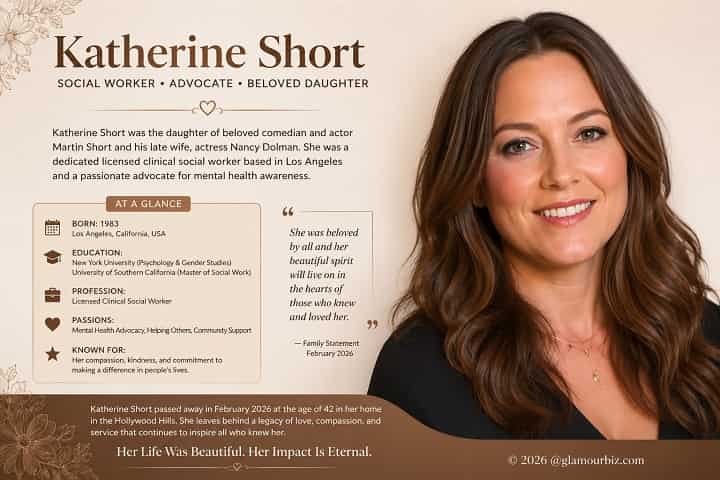
Martin Short has spoken publicly for the first time about the death of his daughter, Katherine Short, who passed away by suicide after a long struggle with mental health challenges, including borderline personality disorder. In a deeply emotional interview, he described the loss as a “nightmare” and reflected on the importance of treating mental illness with the same seriousness as physical diseases.
The actor emphasized that mental health conditions should not carry stigma and called for more open conversations within families and society. Drawing from his own life experiences, including the loss of his wife Nancy to cancer, Short highlighted the need for compassion, early support, and better awareness around mental health care.
He is also supporting the organization Bring Change to Mind, which aims to reduce stigma and encourage dialogue about mental illness. His reflections come alongside the release of his Netflix documentary Marty: Life is Short, which explores his personal and professional journey, including themes of grief, resilience, and healing.
Martin Short Speaks Out on Mental Health Awareness After the Death of His Daughter Katherine
In a deeply emotional and rare public reflection, Martin Short has spoken candidly about the loss of his daughter, Katherine Short, and the lasting impact it has had on his life and perspective. Katherine, who was 42, died by suicide after a long and difficult struggle with borderline personality disorder and other mental health challenges. For Short and his family, the loss remains profoundly painful, something he has described as a “nightmare.”
Despite his grief, the acclaimed actor and comedian chose to speak openly during an interview with CBS Sunday Morning, aiming to transform personal tragedy into a message of awareness and understanding. His decision reflects a growing commitment to addressing mental health issues with honesty rather than silence.
Short drew a powerful connection between mental illness and physical disease, emphasizing that both deserve equal seriousness and compassion. He reflected on his late wife Nancy’s death from ovarian cancer in 2010, explaining that illness—whether affecting the body or the mind—can become terminal in devastating ways. His comparison challenges long-standing stigma, particularly around suicide, and encourages a more medical and compassionate understanding of mental health conditions.
Beyond sharing his personal story, Short has become an advocate for change. He is involved with Bring Change to Mind, an organization founded by actress Glenn Close that works to dismantle stigma and promote open conversations about mental illness. Through this platform, he hopes to encourage families to speak more freely, seek help earlier, and support one another without shame or fear.
His reflections are also featured in the Netflix documentary Marty: Life is Short, which explores his life, career, and personal struggles. By sharing his journey, Short aims to create space for empathy and dialogue, reminding audiences that mental health is a vital part of human well-being. Ultimately, his message is one of compassion and awareness—urging society to replace silence with understanding, and stigma with support.
Katherine Short’s Early Life: Growing Up in a Famous Household
Katherine Short was born into a family deeply rooted in the entertainment industry. As the daughter of Martin Short and Nancy Dolman, she grew up in an environment shaped by creativity, public recognition, and artistic expression. However, despite her father’s fame, Katherine’s upbringing was reportedly grounded in privacy and a strong sense of normalcy.
Martin Short and Nancy Dolman were known for intentionally keeping their family life away from the public eye. They prioritized raising their children outside of Hollywood’s constant attention, allowing them to experience a more private and stable childhood. Katherine, along with her siblings, was encouraged to pursue her own identity rather than being defined by her father’s celebrity status.
While not much is publicly documented about her early education or childhood activities, those close to the family have often described the Short household as loving and supportive. Katherine was believed to have been surrounded by a strong emotional foundation, even as she later faced internal struggles that were not visible to the outside world.
Growing up in a famous household can often create a unique set of pressures, but Katherine’s early life appears to have been intentionally shielded from media exposure. This privacy, however, also meant that her personal challenges later in life remained largely unseen by the public until after her passing.
Katherine Short and the Reality of Long-Term Mental Health Battles
Katherine Short’s life story, though private, has become part of a broader and increasingly important conversation about mental health awareness. She struggled with borderline personality disorder and other mental health conditions over a long period of time, reflecting the complex and often invisible nature of psychological illness.
Borderline personality disorder is known for affecting emotional regulation, relationships, and self-image. It is often misunderstood and misrepresented, which can make it even more difficult for individuals to seek or receive appropriate support. Katherine’s experience highlights the challenges many individuals face when dealing with long-term mental health conditions that are not always visible or easily diagnosed by outsiders.
Martin Short has spoken about the importance of recognizing mental illness as a serious medical condition. In his reflections, he has compared mental health struggles to physical diseases like cancer—conditions that require treatment, understanding, and compassion rather than judgment or stigma.
Katherine’s battle also sheds light on a broader issue: the lack of open conversation around mental health in many families and communities. Even in supportive environments, individuals may struggle silently for years without fully expressing the extent of their pain. Her story serves as a reminder that mental health challenges can affect anyone, regardless of background, privilege, or family structure. It also underscores the importance of early intervention, accessible mental health care, and continued public education.
Inside Katherine Short’s Private Career and Life Beyond the Spotlight
Unlike many children of celebrities, Katherine Short lived a life largely removed from the public spotlight. She did not pursue a high-profile career in entertainment, and instead maintained a private existence away from media attention. There is limited public information about her professional life, which reflects the family’s long-standing commitment to privacy. Martin Short and Nancy Dolman made a conscious decision to protect their children from the pressures of fame, allowing them to explore their own paths without public scrutiny.
Katherine’s life, therefore, was defined more by personal experiences and private relationships than by public achievements or celebrity status. This privacy has made her story even more poignant, as it highlights how mental health struggles can exist quietly, even in lives that appear stable from the outside.
Her passing has brought renewed attention to the importance of emotional openness within families and communities. It also emphasizes that a lack of visible struggle does not necessarily mean a lack of internal suffering.
In remembering Katherine, the focus is not on fame or public accomplishments, but on the human experience of living with mental illness and the importance of compassion in understanding it.
Top 5 FAQs about Katherine Short
1. Who was Katherine Short?
Katherine Short was the daughter of actor and comedian Martin Short, known for living a private life away from the entertainment industry.
2. What mental health condition did Katherine Short struggle with?
She reportedly struggled with borderline personality disorder and other long-term mental health challenges.
3. What did Martin Short say about his daughter’s passing?
He described her death as a “nightmare” and emphasized the importance of treating mental health with the same seriousness as physical illness.
4. Was Katherine Short involved in the entertainment industry?
No, she maintained a private life and did not pursue a public career in Hollywood or entertainment.
5. What message is Martin Short promoting after her death?
He advocates for breaking mental health stigma, encouraging open conversations, and supporting organizations like Bring Change to Mind.