
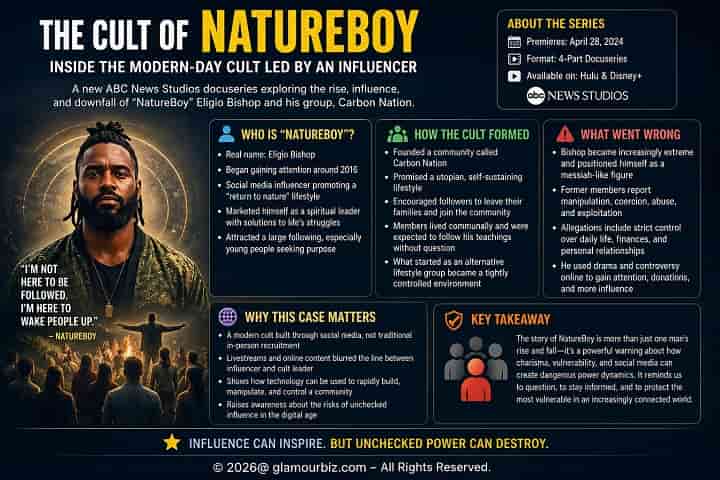
Eligio Bishop, known online as “NatureBoy,” gained attention for promoting a natural living and spiritual lifestyle through social media. His message attracted a loyal online following that believed in his ideas of rejecting modern society and returning to nature. Over time, however, concerns grew about the structure of his community and the level of influence he held over followers.
Reports and former member accounts suggested that the group began to show signs of strict control, including emotional dependence and isolation from outside relationships. This led to increased public scrutiny and media coverage, with authorities examining allegations tied to the community’s activities. The story has since become a broader example of how social media influence can evolve into powerful real-world movements, raising questions about digital authority, online communities, and the risks of unchecked influence in the internet age.
The Rise of “NatureBoy”: How Eligio Bishop Built a Viral Spiritual Persona Online
Eligio Bishop, widely known by his online identity “NatureBoy,” first emerged in the digital spotlight through social media platforms where he promoted an alternative lifestyle centered around nature, spirituality, and self-liberation. His message was direct and emotionally appealing: abandon artificial systems, reconnect with nature, and seek truth beyond societal conditioning.
What made Bishop stand out was not just his message but the way he delivered it. Confident, expressive, and unapologetically bold, he presented himself as someone who had already transcended modern life. In a digital landscape filled with motivational content creators, Bishop carved out a unique identity that blended spiritual philosophy with influencer culture.
His early videos attracted viewers who were disillusioned with modern living. Many described his content as “awakening” or “eye-opening,” as he spoke about topics such as personal freedom, natural healing, and rejecting societal expectations. This emotional resonance helped him quickly build a loyal audience.
As his popularity grew, so did his self-styled identity. “NatureBoy” was no longer just a username—it became a persona representing purity, enlightenment, and rebellion against modern systems. However, this transformation from influencer to spiritual authority marked the beginning of deeper scrutiny around his influence.
Inside the Movement: How Social Media Fueled His Growing Influence and Following
At the core of Bishop’s rise was his ability to use social media as a tool for constant engagement and influence. Platforms like livestreams, video posts, and direct interactions allowed him to build a community that felt personal and immersive.
Followers were not just passive viewers—they were active participants in his digital ecosystem. Through continuous messaging and live discussions, Bishop maintained a direct line of communication with his audience. This created a sense of closeness that traditional media figures rarely achieve.
Over time, his online presence evolved into what many described as a structured community. Followers began to align their beliefs, lifestyles, and decisions with his teachings. Reports from former members suggest that loyalty to Bishop became a central expectation within the group.
Critics argue that this environment gradually shifted from inspirational to controlling. Members were encouraged to adopt strict lifestyle practices, isolate themselves from external influences, and fully commit to the group’s ideology. Supporters, however, described the experience as transformative, claiming it gave them purpose, discipline, and identity.
What makes this case particularly significant is how naturally it developed within a digital environment. Unlike traditional communities, this one was built entirely online—making it faster to grow but harder to monitor or regulate. The blurred line between influencer and spiritual leader became increasingly difficult to define. Bishop was no longer simply sharing content; he was shaping belief systems in real time.
From Lifestyle Guru to Allegations of Control: The Dark Shift Behind the Image
As the movement expanded, concerns began to surface regarding the internal dynamics of Bishop’s community. What started as a message of self-improvement and natural living gradually took on a more rigid and controversial structure.
Former members and observers described a shift in tone. Bishop’s teachings, once motivational, were now interpreted by some as directives that required strict obedience. Allegations emerged suggesting that followers were encouraged to distance themselves from family, friends, and outside perspectives.
This isolation, critics argue, created a dependency loop where followers relied heavily on the group—and its leader—for emotional and spiritual validation. The environment reportedly reinforced a single perspective, making alternative viewpoints appear invalid or harmful.
Financial and emotional influence also became points of concern. Some reports suggest that members contributed resources or made life decisions based on guidance from within the group structure. While supporters denied claims of wrongdoing, the growing number of concerns prompted deeper investigation into the nature of the community.
Law enforcement and media attention eventually intensified as allegations became more widely discussed. The situation escalated from an online discussion to a real-world investigation into whether the group exhibited characteristics of coercive control.
The contrast between Bishop’s public image and these allegations created a sharp divide in public perception. To some, he remained a misunderstood spiritual figure challenging societal norms. To others, he represented the risks of unchecked influence in the digital age.
Fallout and Investigation: What Happened After the Cult-Like Allegations Surfaced
As scrutiny increased, Bishop’s once powerful online presence began to weaken. Social media platforms that had helped build his following became spaces of criticism, debate, and concern. The same livestreams that once attracted loyal audiences now drew public questioning and backlash.
Investigations into the group’s activities placed further pressure on its structure. Former members began speaking publicly about their experiences, contributing to growing media coverage and public awareness. The narrative surrounding “NatureBoy” shifted significantly—from inspirational influencer to controversial figure under investigation.
The fallout also sparked a broader conversation about the responsibility of online influencers and the psychological impact of digital authority. Experts pointed out that charisma combined with constant digital exposure can create powerful emotional bonds between influencers and followers.
In Bishop’s case, that bond appeared to extend beyond entertainment or inspiration into areas of personal belief and lifestyle control. This raised important questions about where the line should be drawn between influence and manipulation in the digital era.
As legal and public scrutiny continued, Bishop’s influence diminished significantly. His story, however, did not disappear. Instead, it became part of a larger cultural discussion about modern digital communities, online leadership, and the risks of unchecked authority in virtual spaces.
Today, the "Nature Boy" phenomenon is often cited as a cautionary example of how quickly online influence can evolve into something far more complex than intended. It highlights how digital platforms can amplify not just ideas—but entire belief systems that shape real-world behavior.
Top 5 FAQs
1. Who is Eligio Bishop, also known as NatureBoy?
Eligio Bishop is a social media personality who gained attention for promoting a natural living and spiritual lifestyle under the name “NatureBoy.”
2. Why did NatureBoy become controversial?
He became controversial due to allegations that his online community developed cult-like characteristics, including claims of manipulation and isolation.
3. What kind of content did he originally create?
He initially created motivational and spiritual content focused on natural living, self-awareness, and rejecting modern societal systems.
4. How did he gain followers so quickly?
He used social media platforms, especially livestreams and video content, to build a direct and emotionally engaging connection with viewers.
5. What is the current status of his online presence?
His visibility has significantly decreased following public scrutiny and investigations into his community and activities.