
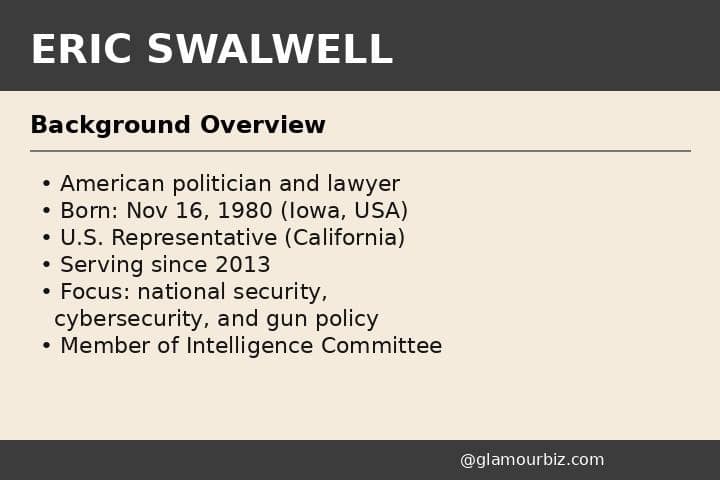
Allegations against Eric Swalwell have shaken the California governor race. He denies all claims, but the controversy led to major political pressure and media attention. As a result, he suspended his campaign, reshaping the election and opening the field for other candidates.
Allegations Against a Leading California Governor Candidate Emerge
The California governor race took a dramatic turn after serious allegations surfaced against U.S. Representative Eric Swalwell, who had been considered one of the prominent Democratic contenders. According to multiple media reports, accusations of sexual misconduct and abuse were made by a former staff member and several other individuals. These claims quickly gained national attention and became a central issue in political discussions.
The allegations include claims of inappropriate behavior and non-consensual encounters, with some reports suggesting that one accuser was allegedly in a vulnerable state at the time of the incident. As the story developed, it was widely covered by major news organizations and sparked immediate debate across political and public circles.
Swalwell has strongly denied all allegations. In his public response, he described the claims as false and politically motivated, emphasizing that he intends to defend himself through legal channels. He also stated that he would cooperate with any formal investigations if required.
While the allegations are still under public scrutiny and have not resulted in a legal conviction, they have already had a major impact on his political career and public image. In modern politics, even allegations alone can significantly influence voter perception, media coverage, and party support, especially in high-profile elections such as the California governor race.
Political Fallout and Loss of Support Within the Democratic Party
Following the emergence of the allegations, the political consequences were swift and severe. Members within Swalwell’s own party began distancing themselves from him, and several Democratic allies reportedly expressed concern about the potential damage to the party’s reputation and electoral chances.
Political analysts noted that campaigns today are highly sensitive to public trust and media narratives. Once serious allegations surface, candidates often face pressure not only from opponents but also from within their own political groups. In this case, internal pressure reportedly grew rapidly, making it difficult for Swalwell to maintain a stable campaign structure.
Supporters who had previously backed him began reassessing their position, while some political organizations paused endorsements or public support. In competitive elections like the California governor race, maintaining unified party backing is crucial, and any disruption can significantly weaken a candidate’s chances.
The situation also led to broader discussions about accountability and vetting in political campaigns. Some party members emphasized the importance of addressing allegations seriously, while others highlighted the need to ensure fairness and due process. This divide further complicated the political environment surrounding the campaign.
As media coverage expanded, the story began to dominate political headlines, overshadowing policy discussions and campaign messaging. This shift in focus is often damaging for candidates, as it redirects public attention away from their platform and toward personal controversy.
Campaign Suspension and Official Response from the Candidate
Amid increasing pressure and growing controversy, reports indicate that Eric Swalwell decided to suspend his campaign for California governor. This decision marked a major turning point in the race, as he had been considered one of the leading Democratic figures in the contest.
In his public statement, Swalwell denied all allegations and maintained that he would continue to defend himself. However, he acknowledged that the ongoing controversy had made it extremely difficult to continue running an effective campaign. Suspending a campaign is often a strategic decision in politics, especially when legal or personal matters begin to dominate public attention.
Campaign suspension does not necessarily mean withdrawal from public life or political office. In many cases, candidates step back temporarily to focus on legal defense, personal matters, or to reduce pressure on their party. In this situation, the move was widely interpreted as an effort to contain political damage and stabilize the broader Democratic field in California.
Following the announcement, political reactions were immediate. Some party members expressed disappointment, while others viewed the decision as necessary under the circumstances. Opponents of the Democratic Party also used the situation to critique broader leadership standards and candidate selection processes.
The suspension reshaped the dynamics of the governor race. With one of the major contenders stepping aside, attention quickly shifted to other Democratic and Republican candidates who may now have a clearer path forward. Political analysts began reassessing election forecasts, noting that such developments can significantly alter voter behavior and campaign strategies.
Impact on the California Governor Race and Future Implications
The suspension of Eric Swalwell’s campaign has had a major impact on the California governor race. As one of the early frontrunners, his presence shaped discussions around policy direction, party leadership, and electoral strategy. His exit has now created a power vacuum within the Democratic field, leading to increased competition among remaining candidates.
From a political standpoint, such developments often lead to rapid realignments. Supporters and donors may shift their backing to other candidates, while campaign strategies are quickly adjusted to reflect the new competitive landscape. This can lead to unexpected shifts in polling and voter sentiment.
The situation also highlights the importance of personal reputation in modern politics. In an era of instant news and social media amplification, allegations—whether proven or not—can quickly reshape public perception. Candidates are increasingly judged not only on policy positions but also on character and personal conduct.
For voters, this development raises broader questions about trust, accountability, and the standards expected from public officials. Many observers argue that allegations must be thoroughly investigated before conclusions are drawn, while others believe that political leaders must be held to higher ethical expectations regardless of legal outcomes.
Looking ahead, the California governor race is expected to remain highly competitive. With Swalwell no longer actively campaigning, other candidates will likely intensify their outreach efforts and policy messaging. The Democratic Party, in particular, may need to re-evaluate its strategy to maintain cohesion and voter confidence.
Ultimately, the long-term impact of this situation will depend on both legal developments and political responses. Whether the allegations lead to further consequences or are resolved in favor of the accused, the case has already left a lasting mark on the election cycle.
Top 5 Frequently Asked Questions (FAQ)
1. Who is Eric Swalwell?
Eric Swalwell is a U.S. Representative from California and a Democratic politician who has served in Congress since 2013.
2. Why did he suspend his California governor campaign?
He reportedly suspended his campaign following serious sexual misconduct allegations and increasing political pressure, although he denies all claims.
3. Are the allegations proven?
No. As of the latest reports, the allegations remain unproven and have not resulted in a legal conviction. Investigations and public discussions are ongoing.
4. How has this affected the election?
His suspension has significantly reshaped the California governor race by removing one of the leading Democratic candidates and changing campaign dynamics.
5. What happens next in the race?
Other candidates are expected to gain momentum, and the Democratic Party will likely reorganize its strategy as the election approaches.